Peptide Quality Control & Pureness Testing Boc Sciences
Peptide Launch Qc Screening Services Bio-synthesis All peptides sold by Apex Laboratory are desired solely for in-vitro laboratory study usage and are except human usage. Peptide screening documents ought to be interpreted as batch-level logical evidence for research study product, not as clinical-use permission. Peak's How to Read a Peptide COA guide goes through this procedure detailed. The buddy page on why 99 percent pureness issues explains why tiny pollutant percentages can still matter in sensitive in-vitro assays. Sincere Peptide is not an intensifying drug store or Peptide Manufacturer chemical compounding facility as specified under section 503A of the Federal Food, Medicine, and Aesthetic Act, nor an outsourcing facility as specified under section 503B. A peptide missing one amino acid might show up 99% pure on HPLC, but would certainly be 0% the preferred peptide. Endotoxin screening (LAL assay) is a distinct examination from HPLC and mass spec-- it requires various reagents and methodologies. Some distributors do not include it because the LAL examination adds expense and they perceive it as less appropriate for study chemicals than for injectable drugs.
Is 95% purity great for peptides?
Peptides with an 85% purity degree or higher are normally made use of in enzyme assays or biological task research studies. Peptides with pureness more than 95% are excellent for measurable analysis.
Lack Of Effective Approaches For Structural Modifications And Sequence Verification
According to ICH guidelines, verified methods suggest the lab has actually developed the examination's precision, precision, discovery restrictions, etc, making certain the information you obtain are reputable. Peptide pureness screening is the procedure of verifying that a peptide sample includes only the desired sequence-- and no substantial pollutants or byproducts from synthesis. Because peptides are created with complicated chemical procedures, trace contaminations can develop normally. Evaluating allows scientists to recognize precisely what remains in the vial, confirming both identity and high quality. Gauging peptide purity is typically made with logical high-performance fluid chromatography (HPLC), commonly paired with mass spectrometry (MS) for identification verification.- Several COAs additionally define known or "defined contaminations" versus undefined ones, each with their specific portions if over a particular limit.
- Scientists usually evaluate identity testing to confirm that the compound being evaluated matches the desired peptide.
- Armed with this expertise, you can with confidence interpret labels like "95% pureness, research study quality" and use those peptides to drive your experiments without complication.
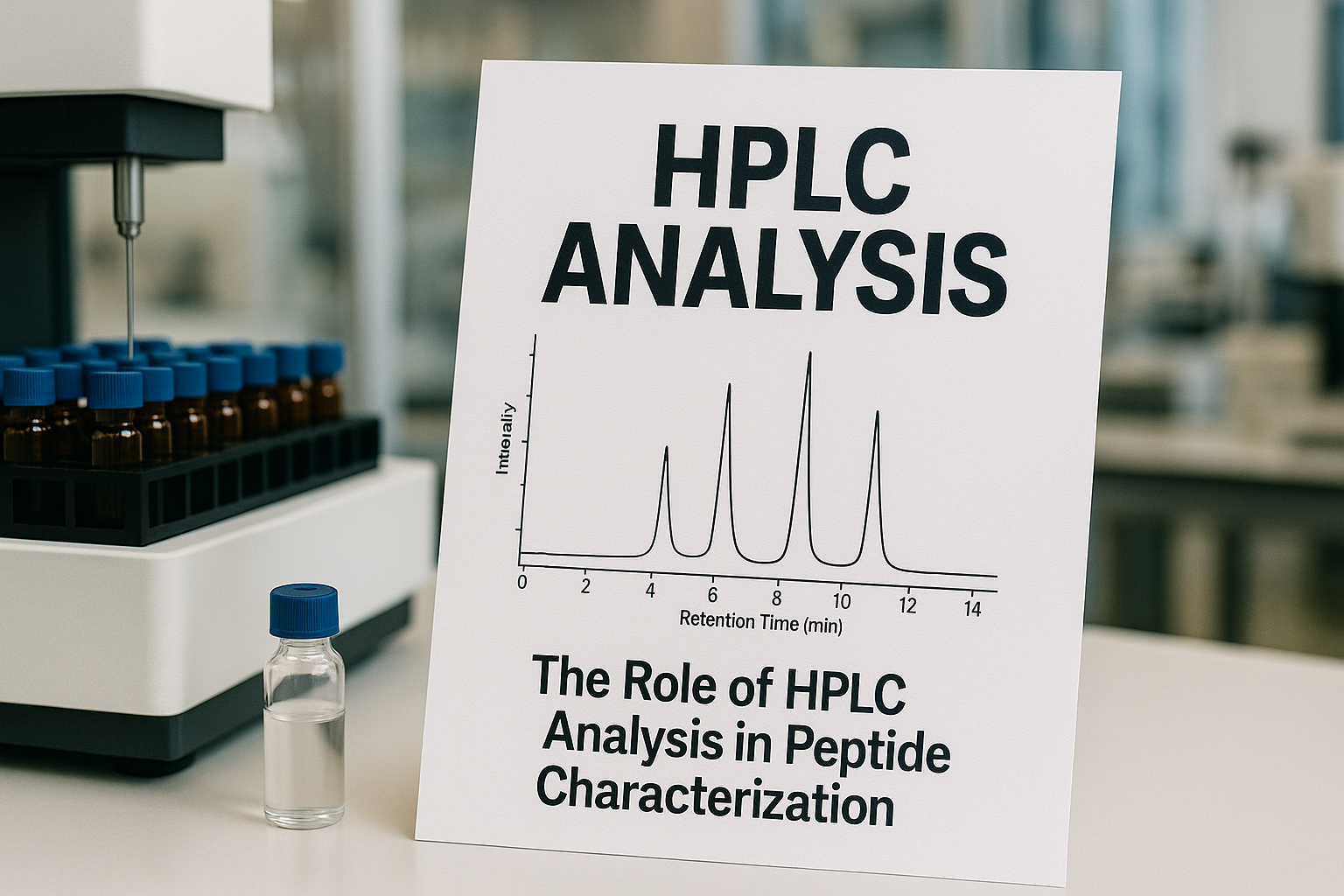
- High-Performance Liquid Chromatography separates substances within an example to aid determine and measure individual parts.
Peptide Testing Labs: Your Total Guide To Third-party Confirmation, Purity Testing, And Quality Control
A lot of peptide pureness evaluations utilize reversed-phase HPLC (RP-HPLC). In this configuration, the fixed stage is hydrophobic (water-repelling), typically C18-bonded silica. The mobile stage is a gradient of water and an organic solvent like acetonitrile, commonly with a small amount of trifluoroacetic acid (TFA) to hone the optimals. Particularly customized peptides or cyclic peptide series are difficult to confirm, which influences quality control. This exceptional resource permits researchers to validate items without expense, though shipping expenditures and example prep work stay your duty. For scientists collaborating with certain substances like BPC-157 or TB-500, mass spectrometry verification guarantees you're dealing with the real compound instead of another thing completely. This method divides peptide blends and measures the relative amounts of various parts. When a COA states "99% purity by HPLC," this implies the analysis revealed 99% of the detected product was the target peptide, with just 1% being pollutants. These records apparently validate pureness, identity, and other high quality metrics. Top-tier laboratories typically report peptide pureness well above 95%, often ≥ 98-99%, by utilizing state-of-the-art HPLC and MS evaluations. They also check both basic materials and finished peptide vials, which helps catch any impurities, destruction items, Click here for more or solution incongruities. This level of detailed analysis makes certain the peptide's accuracy-- implying the series and purity are exactly as classified-- which is crucial for experimental reproducibility. By confirming structure via numerous validated techniques, lab recognition warranties that scientists receive a high-purity peptide that will carry out as expected in the laboratory. Trusted laboratories employ proven testing methods to assess peptide samples and verify their purity and chemical structure.